Leopards are the most beautiful big cat in Kenya, and the hardest to photograph well. They rest in trees for hours, then vanish into grass in seconds. This guide covers seven camera tips for Kenya safari leopard photography, with real distances and fees.
Best Places for Leopard Photography in Kenya
The Maasai Mara and its private conservancies offer Kenya’s strongest all-around leopard photography, especially Mara North, Naboisho, Olare Motorogi, and the Mara Triangle. Samburu is a strong dry-season alternative, while Laikipia is the specialist choice for black leopard photography. Conservancies usually provide quieter sightings and fewer vehicles than the reserve.
For most photographers, Maasai Mara leopard photography is the starting point. The reserve has a healthy leopard population, but it can also be crowded. The private conservancies next door change the game. Mara North and Naboisho limit vehicle numbers. The Mara Triangle and Olare Motorogi also offer quieter sightings.
Samburu is a strong dry-season alternative. The riverine forest along the Ewaso Nyiro is a natural leopard corridor. For a full look at that region, read our Samburu wildlife photography guide. Laikipia is the specialist choice for black leopards, with very low vehicle density.
| Location | Leopard habitat | Distance from Nairobi | Drive time | Day access (indicative) |
|---|---|---|---|---|
| Masai Mara National Reserve | Acacia woodland, riverine forest | About 270 km | 5 to 6 hours | USD 200 per adult per day, Jul-Dec; USD 100, Jan-Jun |
| Mara North Conservancy | Grassland, riverine thicket | About 280 km | 5.5 to 6.5 hours | About USD 80-150 per night, in lodge rate |
| Naboisho Conservancy | Acacia woodland, open plain | About 280 km | 5.5 to 6.5 hours | About USD 80-150 per night, in lodge rate |
| Samburu National Reserve | Dry riverine forest, Ewaso Nyiro | About 330 km | 5 to 6 hours | Indicative only: about USD 70-90 per adult per day |
| Laikipia conservancies (Lewa, Ol Pejeta, Loisaba) | Rocky hills, riverine strips | About 220-260 km | 4 to 5 hours | Indicative only: about USD 100-150 per night, in lodge rate |
Note on fees: the reserve is run by Narok County, not by Kenya Wildlife Service. Non-resident rates are USD 100 per adult per day from January to June and USD 200 from July to December, effective October 2025. A full budget breakdown is in our Maasai Mara safari prices guide.
Tip 1: Pick the territory before the lens. A quieter conservancy gives more usable time with a leopard.
Best Time of Day and Season for Leopard Sightings
Plan leopard drives from roughly 5:30-8:30 a.m. and 4:00-6:30 p.m., when leopards are most likely to move, hunt, or climb into resting trees. January-February and July-October generally improve visibility and prey concentration, but leopards occur year-round and sightings still depend on territory, guide skill, and patience.
The first two hours of daylight give soft, low sun. The last two hours before dark give warm side light. The strongest opportunity arrives when the best sighting and the best light do not match. You may find a leopard walking at 9:30 a.m. in harsh light. A patient photographer may get the same leopard in softer light the next morning.
Season matters too. In the Mara, July to October brings migration prey, so leopards are more visible. January and February are dry, with low grass. If you ask about the best time to see leopards in Kenya, the answer is a window, not a month.
Tip 2: Plan drives around first and last light. Book a camp close to leopard habitat.
Camera and Lens Gear for Kenya Safari Leopard Photography
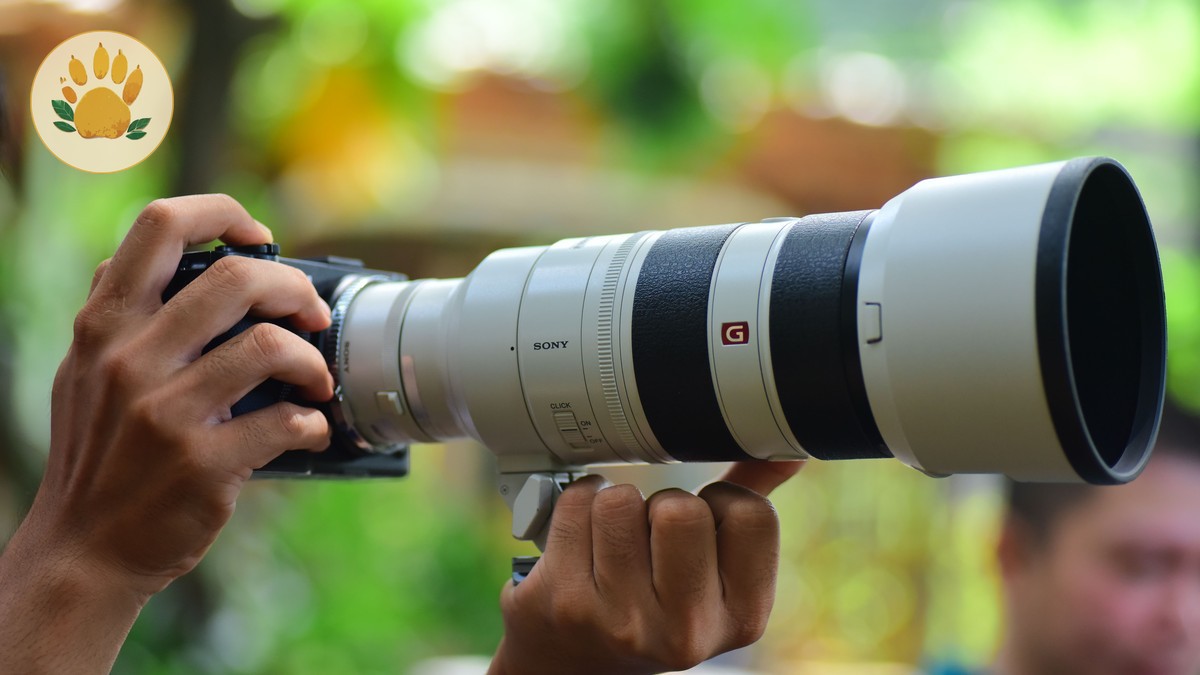
A 300-600mm telephoto lens is the core lens for Kenya safari leopard photography. A 400-600mm lens is useful for distant tree subjects, and 300-400mm works better for closer vehicle encounters. Carry two camera bodies if possible, plus a beanbag, spare batteries, memory cards, and a 70-200mm or 24-105mm lens for wider behavioral scenes.
A leopard in a tree is often 30 to 60 meters away. A 400mm lens gives a good frame. A 600mm gives a tight portrait. When a leopard walks along the track, 300mm is often enough. A 200-600mm zoom covers both scenes without changing lenses.
A second body is worth the weight. Changing lenses in a dusty vehicle loses shots. Put a 70-200mm on the second body for wider portraits. A beanbag is more useful than a tripod. Carry spare batteries and enough cards for 1,000 to 2,000 frames per day.
Tip 3: Carry one long lens, one backup body, and a beanbag.
Recommended Camera Settings for Leopards
Start around 1/1000 second, f/4-f/5.6, and Auto ISO for a resting or slowly moving leopard, then raise shutter speed toward 1/2000 second for action. Use continuous autofocus for movement, focus on the eye, and expose for the face in dappled shade. Accept higher ISO rather than losing sharpness in low light.
| Situation | Shutter speed | Aperture | ISO | Autofocus |
|---|---|---|---|---|
| Resting in a tree | 1/1000 sec | f/4 to f/5.6 | Auto ISO | Single or continuous |
| Walking through grass | 1/1600 sec | f/4 to f/5.6 | Auto ISO | Continuous |
| Running or climbing | 1/2000 sec or faster | f/4 to f/5.6 | Auto ISO | Continuous, wide area |
Tip 4: Raise the shutter before action starts. A leopard drops from a branch and runs in seconds. Start at 1/1000. Move to 1/2000 when the animal shows signs of moving.
Tip 5: Expose for the face, not the scene. In dappled shade, the camera meter may leave the leopard dark. Use spot metering on the face, or add about +0.7 to +1.0 exposure compensation. Focus on the near eye. If the eye is sharp, the image works.
How to Photograph Leopards from a Safari Vehicle
Use a beanbag or stable window support, keep the vehicle’s engine off when practical, and ask the driver to position for clear sightlines rather than simply moving closer. Keep the sun behind you for coat detail. Leave space in front of a moving leopard, and avoid crowding the animal or blocking another vehicle’s view.
Leopards in the Mara are used to vehicles, but they are not tame. The vehicle works as a blind. Move slowly and speak quietly. Use the electronic shutter if you have one. A mechanical click can make a leopard lift its head at the worst moment.
Position matters more than proximity. Ask the driver to place the vehicle so the sun is on the leopard. Side light brings out the rosettes. Keep the engine off when parked. Leave space in front of a walking leopard. Do not crowd the animal or block another vehicle.
Tip 6: Treat the vehicle as a blind, not a balcony. That takes stillness, patience, and a driver who understands light and angles.
A dedicated photo guide knows where a resident leopard sleeps and hunts. Our Kenya private guide pricing page explains what that difference costs.
Black Leopard Photography in Laikipia
Laikipia’s private conservancies are Kenya’s specialist destination for black leopard photography, but a sighting is never guaranteed. Melanistic leopards are especially difficult to expose because their dark coat loses detail in shadow, so prioritize side light, the eyes, and a clean background. Choose a dedicated multi-day itinerary if this is the primary photographic goal.
Black leopard photography Kenya is a specialist pursuit. The documented melanistic leopard often called Giza has been seen in Laikipia’s private conservancies. Seeing one is rare. Photographing it well is harder. The dark coat absorbs light. Wait for side light that reveals the rosettes. Focus on the eye. A bright sky will fool the meter, so expose for the animal or use spot metering.
Ask the property about night drives. Some Laikipia conservancies allow them, and that is when black leopards move most. Check before booking. A Laikipia black leopard trip needs time and flexible plans.
How Many Days to Plan for Leopard Photography
Allow at least three to four days in one productive leopard area for a reasonable chance of repeated sightings and changing light. Seven days is more suitable for a black leopard target or a portfolio-focused trip. It allows time for missed drives, poor weather, resting animals, and movement between territories without rushing every encounter.
A classic leopard photography safari in the Mara runs three to four days. Arrive by midday, take an afternoon drive. Do two full days of dawn and late-afternoon drives. Leave on the fourth morning. That gives five light sessions. A five-day version adds a second area like Samburu or Laikipia. A seven-day version works well as four nights in the Mara and three nights in Laikipia. Movement between parks costs time. A 5-hour drive eats a photo day.
Several airstrips serve the Mara, including Mara North, Olkiombo, and Musiara. Flights leave from Wilson Airport in Nairobi. Indicative cost: roughly USD 400 to 700 round trip per person.
Tip 7: Give yourself a fourth morning. That is when you start to understand a leopard’s routine.
The SafariPure Difference
SafariPure plans photo trips around light and leopard behavior, not checklists. We book conservancies with few vehicles. We match the vehicle to the photographer. We arrange drivers who understand camera angles, not just roads.
Our photography itineraries usually run six to eight days. That gives at least four dawn drives, two light sessions per day, and rest between. We handle park fees, conservancy rules, flight connections, and booking windows.
If you want a private guide who knows a resident leopard’s territory, we can arrange it. If black leopard photography is the goal, we will be honest about the odds and the time needed.
Frequently Asked Questions
Where is the best place to see leopards in Kenya?
The Maasai Mara, especially Mara North, Naboisho, Olare Motorogi, and the Mara Triangle, is the best overall destination for leopard sightings and photography. Samburu offers a strong riverine alternative, while Laikipia is the specialist region for black leopards.
What is the best time to see leopards in Kenya?
The most productive periods are early morning, approximately 5:30-8:30 a.m., and late afternoon, approximately 4:00-6:30 p.m. January-February and July-October often offer better visibility, but sightings remain possible throughout the year.
What gear do I need for leopard photography in Kenya?
Bring a camera body with reliable autofocus and high-ISO performance, a 300-600mm telephoto lens, a beanbag, spare batteries, and extra memory cards. A second body with a 70-200mm or wide zoom helps capture environmental portraits and behavior without changing lenses in the vehicle.
What lens do I need for leopard photography on safari?
A 400-600mm lens is useful for leopards resting in distant trees, while a 300-400mm lens is more flexible when vehicles can approach closely. A 70-200mm lens complements the long lens for wider portraits, movement, and scenes showing the leopard’s habitat.
Can you see black leopards in Kenya?
Yes. Laikipia’s private conservancies are among Kenya’s best-known locations for black leopard sightings, including the documented melanistic leopard often called Giza. Sightings are not guaranteed, so photographers should allow several days and treat the trip as a broader Laikipia wildlife safari.
Plan Your Leopard Photography Safari
A leopard photography safari rewards patience more than equipment. The right territory, the right light, and a few extra days matter most. When you are ready to plan, we would be glad to help.
Start by reviewing our Kenya safari itineraries, or contact SafariPure to talk about dates, conservancies, and a vehicle configured for photographers.